
Email info@eichholtzlongisland.com for an exclusive sale


Your cart

Your cart is empty

ILLUMINATING ELEGANCE:

THE ULTIMATE GUIDE TO CLASSIC LUXURY CHANDELIERS

By Cintia Dixon, Interior Designer and Founder,
Eichholtz Long Island and Tlina Design
August 25, 2026
Reading time : 5 Minutes
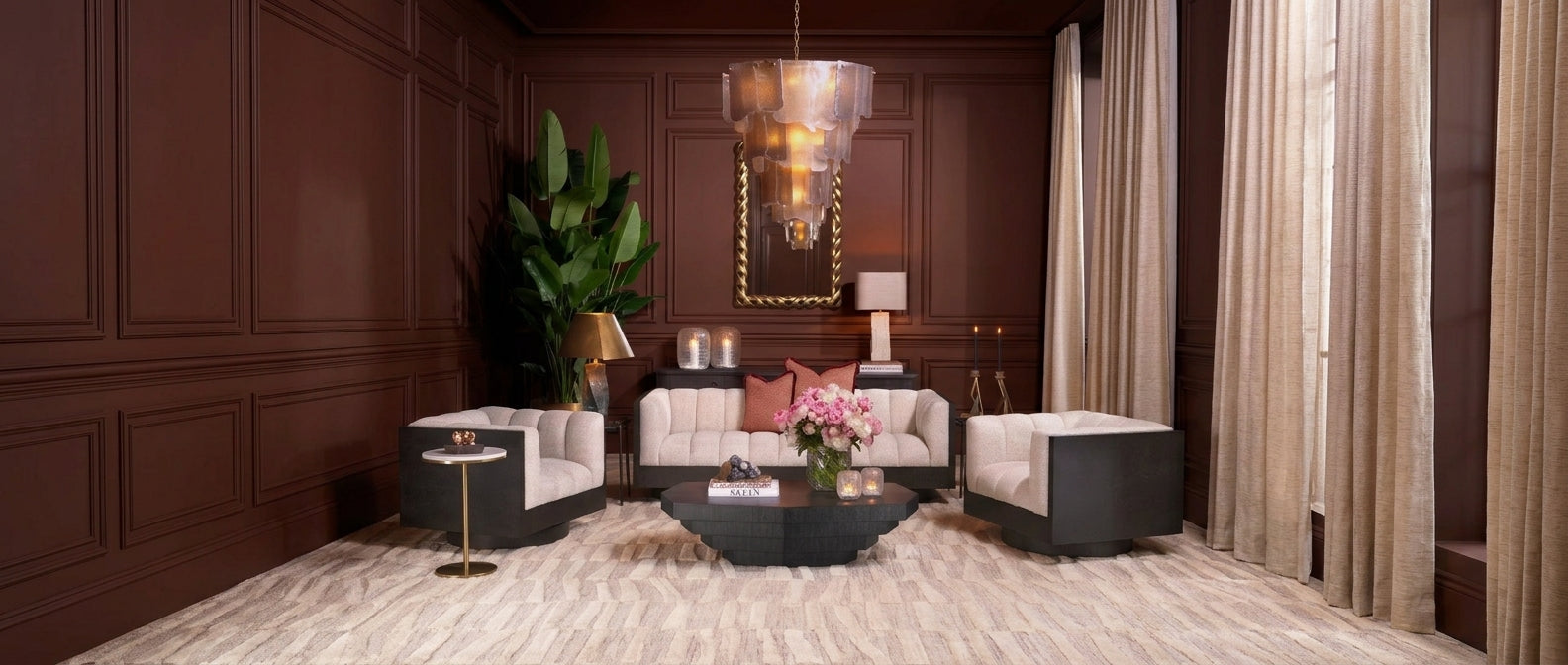
Sculptural Eichholtz Asinara chandelier with textured or smoke glass

There are certain elements in a room that quietly complete the design—and then there are pieces that completely transform it.
A chandelier does both.

Often described as the jewelry of a room, lighting has the ability to change how a space feels the moment you walk in.

It can create intimacy over a dining table, add drama to a double-height foyer, or bring balance to a grand living room that might otherwise feel unfinished.

For many Long Island homes, where generous ceiling heights, open floor plans, and large-scale architecture are common,

choosing the right chandelier is about much more than finding something beautiful. Scale, proportion, material, and placement all matter.

Here are a few of our favorite approaches to choosing a timeless statement chandelier—and how to make it work beautifully within your home.


The Modernized Crystal Classic


Crystal chandeliers will always have a place in luxury interiors, but today’s interpretation feels noticeably different from the overly traditional fixtures of the past.

Think cleaner lines, sculptural silhouettes, refined finishes, and layers of glass that catch the light without overwhelming the room.

The Vittoria L is a beautiful example. Its cascading composition gives us the glamour and presence associated with classic crystal lighting, while the cleaner silhouette allows it to work just as beautifully within a contemporary interior.

This is the kind of fixture we love when traditional architecture meets modern furnishings. A chandelier like this can bring glamour to a formal dining room, make an entrance memorable, or anchor a large living space without making the room feel overly ornate.

The secret is balance. If the chandelier is highly detailed, allow some of the elements around it to breathe. When lighting becomes the statement, it doesn’t need to compete with everything else in the room.

The Mid-Century Heritage


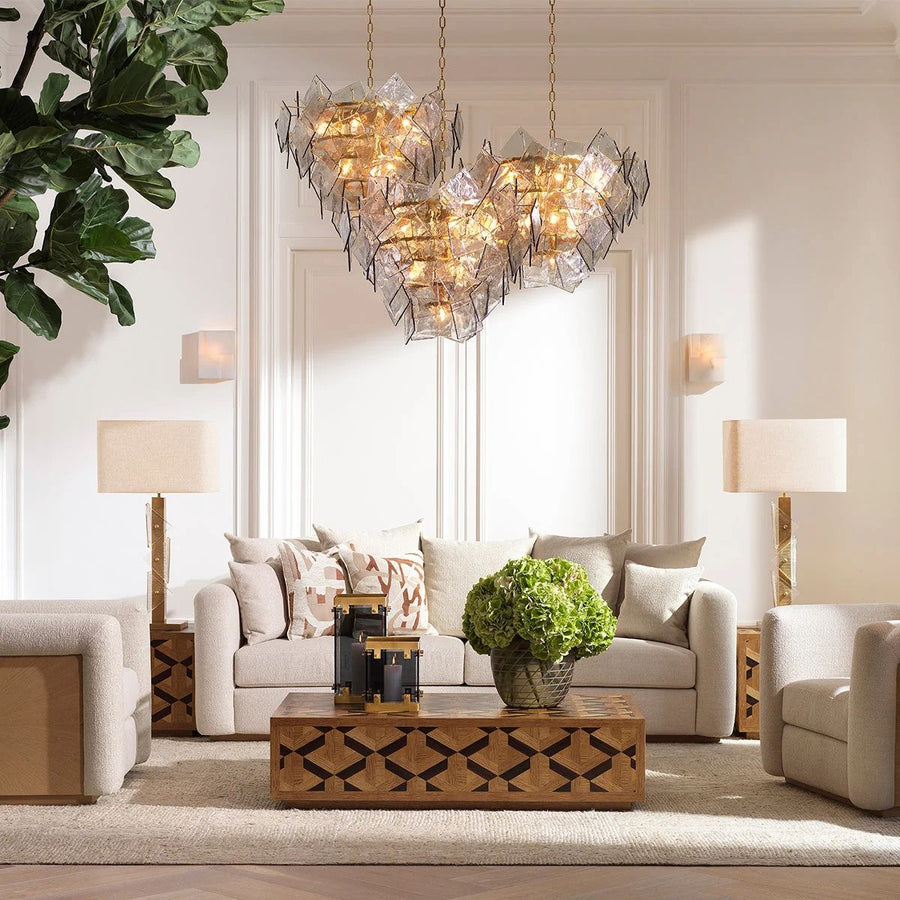
For interiors that call for something warmer and a little less formal, smoked glass and brass can completely change the mood.

The Elysian Chandelier draws inspiration from the glamour of 1950s designer lighting, giving the room a sense of history without feeling dated.

Its warm metallic finish and layered glass make it especially beautiful alongside natural stone, dark woods, leather, bouclé, or richly textured fabrics.

We love this direction for dining rooms, libraries, lounges, and sophisticated living spaces where the goal is luxury without formality.

It also works beautifully when you want a home to feel collected rather than decorated—as though the pieces came together over time rather than being selected all at once.

The Sculptural Minimalist


Not every statement chandelier needs crystals or elaborate detailing. Some of the most dramatic fixtures are also the most sculptural.

Geometric forms, cascading glass, oversized proportions, and layered compositions can make lighting feel almost like an art installation.

The Asinara Chandelier captures that idea beautifully. Its layers create movement and dimension, making the chandelier visually interesting even when the lights are turned off.

In a large living room, staircase, or foyer, a fixture like this becomes part of the architecture itself—filling vertical space and drawing the eye upward.

And this is especially important in homes with double-height ceilings.

A chandelier that appears substantial in a photograph can suddenly feel quite small when placed within a 20-foot-high room.

Always consider the fixture in relation to the entire volume of the space—not simply the furniture beneath it.


GETTING THE RIGHT SCALE

The Dining Room Rule

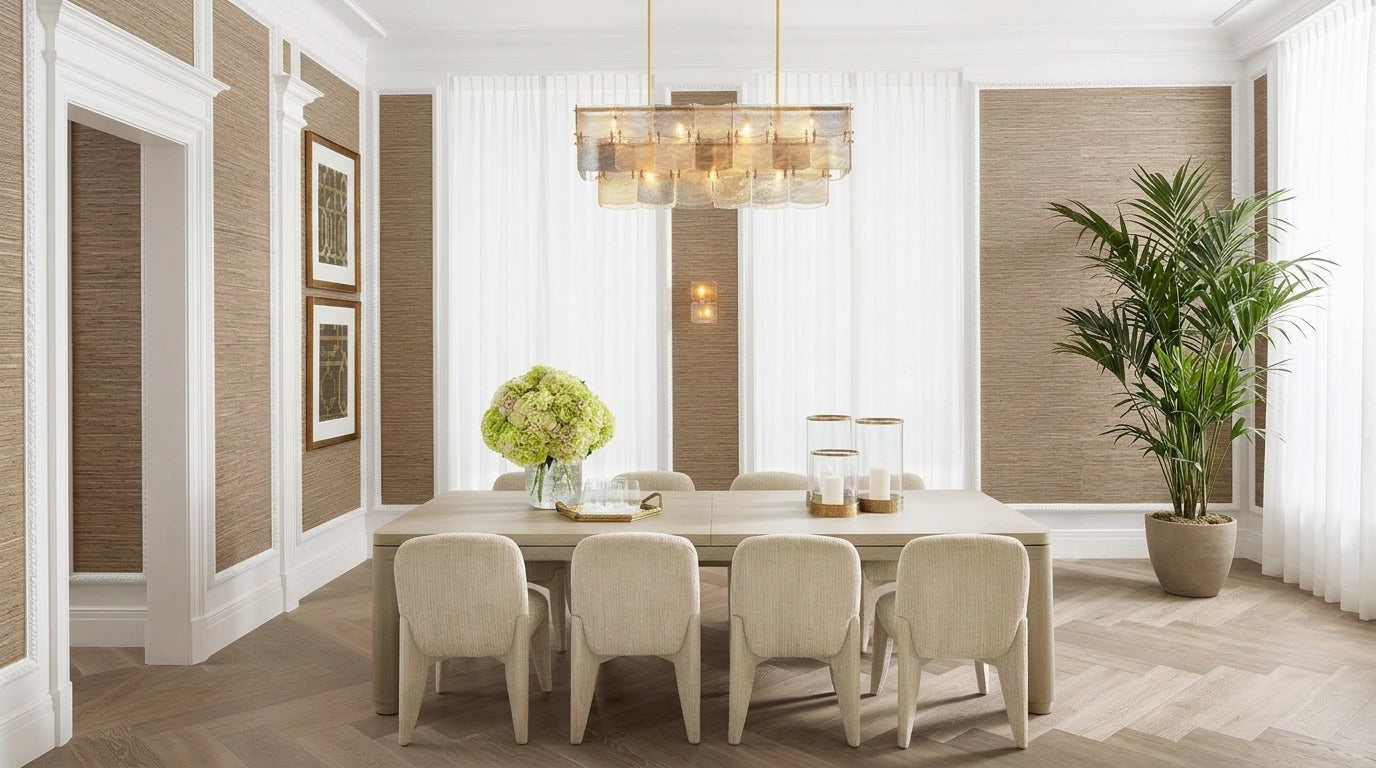
Chandelier Laurent rectangular antique brass finish

One of the questions we hear most often is: How low should my chandelier hang?

For most dining rooms, approximately 30 to 36 inches above the tabletop is a useful starting point when working with a standard eight-foot ceiling.

But good design isn’t simply about following a formula. The chandelier should feel visually connected to the dining table.

When it hangs too high, the fixture can feel disconnected from the furniture and lose some of its impact. When it hangs too low, it can interfere with conversation and sightlines.

The size and shape of the table matter too. A long rectangular table may call for a linear chandelier—or even two coordinated fixtures—while a round dining table often looks beautiful beneath a single centered statement piece.

When selecting high-end dining room chandeliers, we generally prefer a fixture that feels generous rather than undersized. The result should feel intentional from every direction.

The Entryway Statement

A two-story foyer gives you an incredible opportunity to create drama with lighting.

Because these spaces often receive significant natural light during the day, the chandelier needs to look beautiful both illuminated and unlit.

Glass, crystal, polished metals, and sculptural forms interact with daylight, creating shadows and reflections that subtly change throughout the day.

Placement is equally important. In a double-height entry, consider how the chandelier will be viewed from the front door, staircase, second-floor landing, and adjoining rooms.

A chandelier in a grand entry isn’t being seen from only one angle. Its entire composition matters.

Don’t Be Afraid of Scale

One of the most common lighting mistakes we see is choosing a fixture that is simply too small.

Large rooms can handle more than you might expect.

A chandelier should relate not only to the furniture beneath it, but also to the height and volume of the entire room.

In expansive spaces, choosing something slightly larger often creates a much more confident and professionally designed result.

Lighting is one of those areas where being too cautious can actually make a beautiful room feel unfinished. A properly scaled chandelier gives the room a center of gravity.

EXPERIENCE LIGHTING IN PERSON


Photographs can show you the shape of a chandelier. What they can’t always communicate is its presence.

The weight of the glass. The warmth of the metal. The way light moves through each layer. The scale of the fixture. The shadows it creates around the room.

These details become much easier to understand when you experience the lighting in person.

At Eichholtz Long Island, we help homeowners, designers, and trade professionals select lighting based not only on style, but also on architecture, ceiling height, furniture arrangement, and the overall feeling we want the room to create.

Whether you’re searching for a dramatic foyer chandelier, refined dining-room lighting, or a sculptural fixture for a grand living space, the right piece should feel as though it was always meant to be there.

ABOUT THE AUTHOR

Cintia Dixon

Interior Designer and Founder, Eichholtz Long Island and Tlina Design

Cintia Dixon is an interior designer and the founder of Eichholtz Long Island and Tlina Design, a designer-led furniture, lighting, and accessories showroom in Roslyn Heights. Her international expertise and background in hospitality shapes her design vision, enriched by experience crafting immersive event environments and by her Brazilian heritage, rooted in color, culture, architecture, and artistic expression. She works with homeowners, interior designers, architects, and developers throughout Long Island, New York City, Westchester, and the Hamptons.
EICHHOLTZ LONG ISLAND BLOGS